Services

The Chamber of Craft Skopje, in accordance with the Law on Craftsmanship (Official Gazette of the Republic of North Macedonia No. 215/15), has public authority to perform the following tasks: -registration, amendment and deletion in the Craft Register in electronic and paper form, issuing and withdrawal of the Craft License. According to Article 14 of the Law on Craftsmanship (Official Gazette No. 215/15), the Craft Register is maintained as a a one-stop-shop system. Through One-Stop-Shop System, the craftsman’s registration is carried out in the Craft Register, and all legally relevant data are integrated into one single decision, enabling the craftsman to exercise his/her rights./Through the one-stop-shop system, registration of craftsmen and consolidation of all legally relevant data into a single decision is enabled. Through the one-stop-shop system, the following is performed: - Submission of the decision from the primary registration body — the Chamber of Craft — to the Central Registry and filing the application for registration in the Central Registry; - Preparation and submission of documents for registration and deregistration with the Employment Agency of the Republic of North Macedonia, the Pension and Disability Insurance Fund, and the Health Insurance Fund of North Macedonia; - Preparation and submission of documents to competent authorities, in accordance with the law; - Preparation and submission of documentation for opening a bank account (giro account) of the craftsman’s choice; - Preparation and submission of the request to the Public Revenue Office for issuing a decision on exemption from personal income tax; - Preparation and submission of the request for lump-sum taxation to the Public Revenue Office, if the craftsman meets the legal requirements.

Request for Cessation of a Tradesman's Business Activities
Request for Cessation of a Tradesman's Business Activities
Request for a change in the artisan register
Request for Transfer of the Exercise of a Craft Activity
Request for Temporary Suspension of Operations
Request for an artisan's license for a person engaged in an artisanal activity
Request for Restitution to a Former State with Adjustment
The Master Craftsman Examination represents a form of post-secondary education through which candidates acquire a higher level of education — Level VB of the National Qualifications Framework — and advanced professional knowledge, skills, and competences for the qualification Master Craftsman in the respective occupation. The Chamber of Craft Skopje is the initiator of the development and adoption of six (6) Master Craftsman examination programs, namely: 1.Hairdresser 2. Beautician 3. Auto mechanic 4. Baker 5. Confectioner 6. Masseuse/Masseur A Master Craftsman examination program for Tailoring and Sewing is currently under development. The Master Craftsman Examination consists of four parts: 1. Practical part 2. Professional-theoretical part 3. Managerial–legal/economic part 4. Pedagogical–andragogical part Each program (part) contains the following areas: 1. Description of the examination -a detailed description of the exam, types of tasks, questions, duration, location, organization, and required resources. 2. Purpose of the examination -determining the objectives of each specific examination program, i.e., verifying whether the learning outcomes defined in the Master Craftsman examination programs have been achieved. 3. Examination areas -for each examination area, learning outcomes and assessment criteria for performance are provided, with special attention to the formulation and verbs used (presented in tabular form). 4. Method for assessing the achievement of learning outcomes -determination of assessment criteria for both the practical part of the exam and the theoretical tests for all parts of the examination.
Application for the Master's Examination (Official Gazette of the Republic of North Macedonia 36-2008)
Master's Diploma
Law on the National Qualifications Framework
Law on vocational education and training
Law on Crafts (Official Gazette of the Republic of North Macedonia No. 215, 2015)
Regulations for the structure, organization, and administration of the master's examination
Regulations on the Structure, Organization, and Conduct of the Master's Examination (Official Gazette of the Republic of North Macedonia No. 36, 2008)
Regulation for Amending and Supplementing the Regulation on the Structure, Organization, and Conduct of the Master's Examination (Official Gazette of the Republic of North Macedonia No. 200, 2018)
.jpg)
.jpg)
.jpg)
.jpg)
.jpg)
.jpg)
.jpg)
.jpg)
.jpg)
.jpg)
.jpg)
.jpg)
.jpg)
.jpg)
.jpg)
.jpg)
.jpg)
.jpg)
.jpg)
.jpg)
.jpg)
.jpg)
.jpg)
.jpg)
.jpg)
.jpg)
.jpg)
.jpg)
.jpg)
.jpg)
.jpg)
.jpg)
.jpg)
.jpg)
.jpg)
.jpg)
.jpg)
One of the challenges on the labor market is the lack of qualified personnel with the necessary practical skills and competences. In order to ensure future skilled workers for the economy, employers who wish to take a student for practical training must meet specific standards regarding professional and other personnel -mentors -meaning they must have staff who are certified to work with students. According to Article 13 of the Law on Vocational Education and Training, the Chamber is responsible for organizing and conducting mentor trainings and issuing certificates. In accordance with the standard for professional and other staff, the right to participate is granted to persons who are either employers or employees of the employer in the relevant profession, and who have at least three years of work experience in the field. Companies are obliged to organize practical training for students directly at the workplace, for which they must provide appropriate conditions -work environment, equipment, tools and machinery, and most importantly -a mentor who will guide the students through the company’s work processes. Newly certified company mentors must become familiar with the educational legal framework, the methods of communication with all participants in the process (particularly with students), preparation of the practical training implementation plan that must correspond to the curriculum of the given qualification, as well as the processes for monitoring and evaluating the students’ progress. Company mentors will further play a crucial role in the education and professional preparation of students, specifically in acquiring practical skills and professional competences, which are essential for the successful integration of young people into the labor market.
Mentor Application
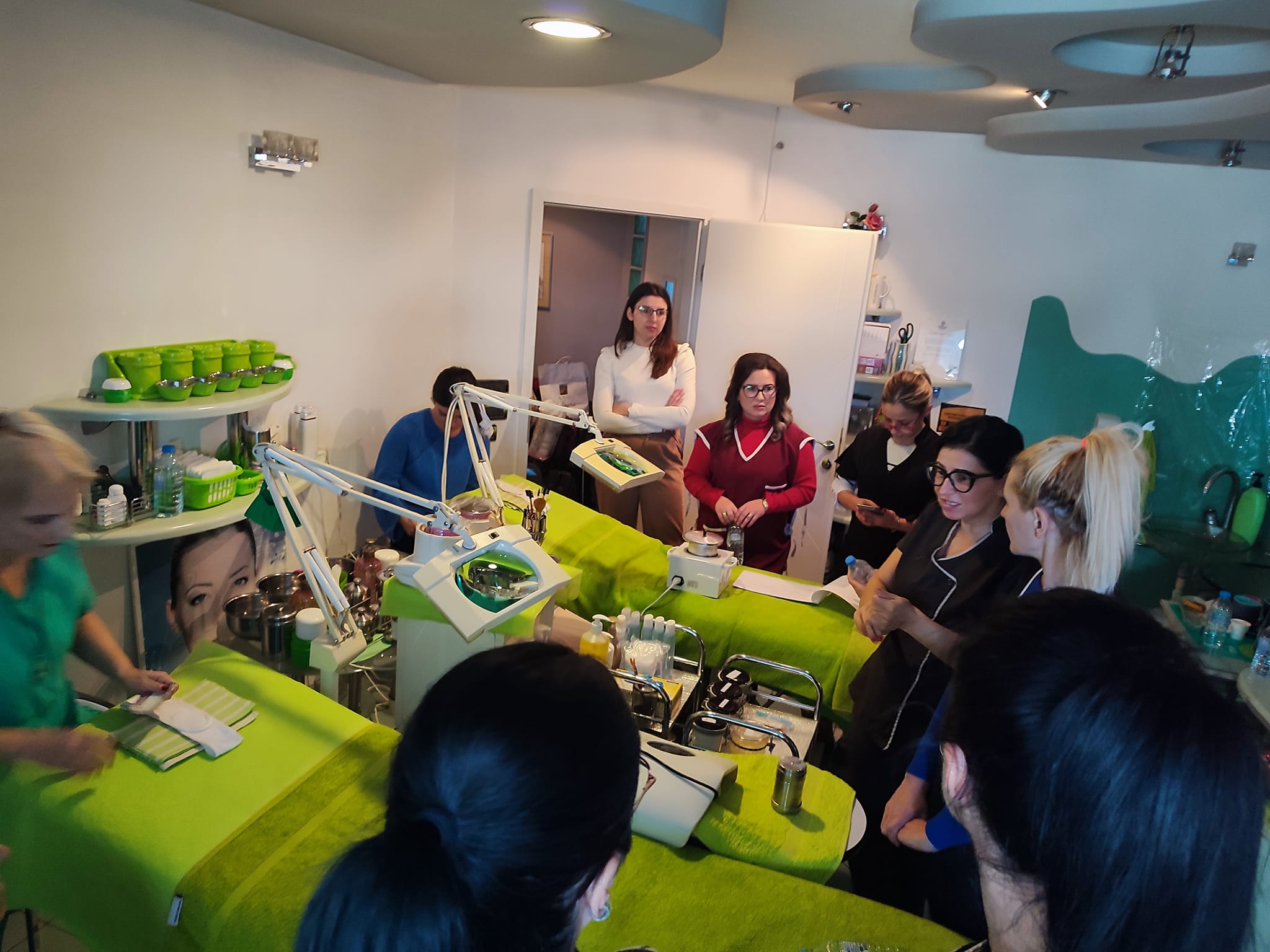
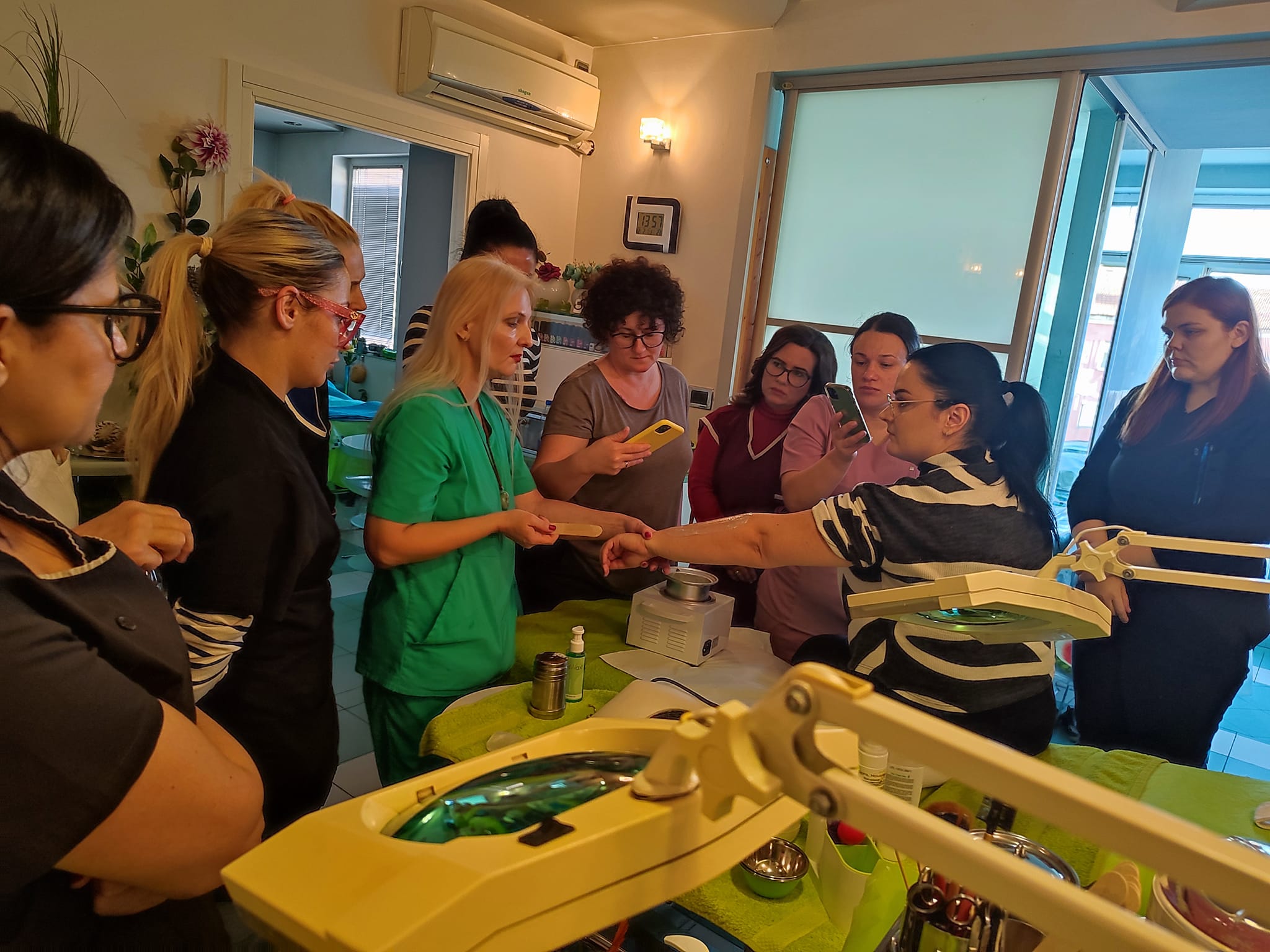
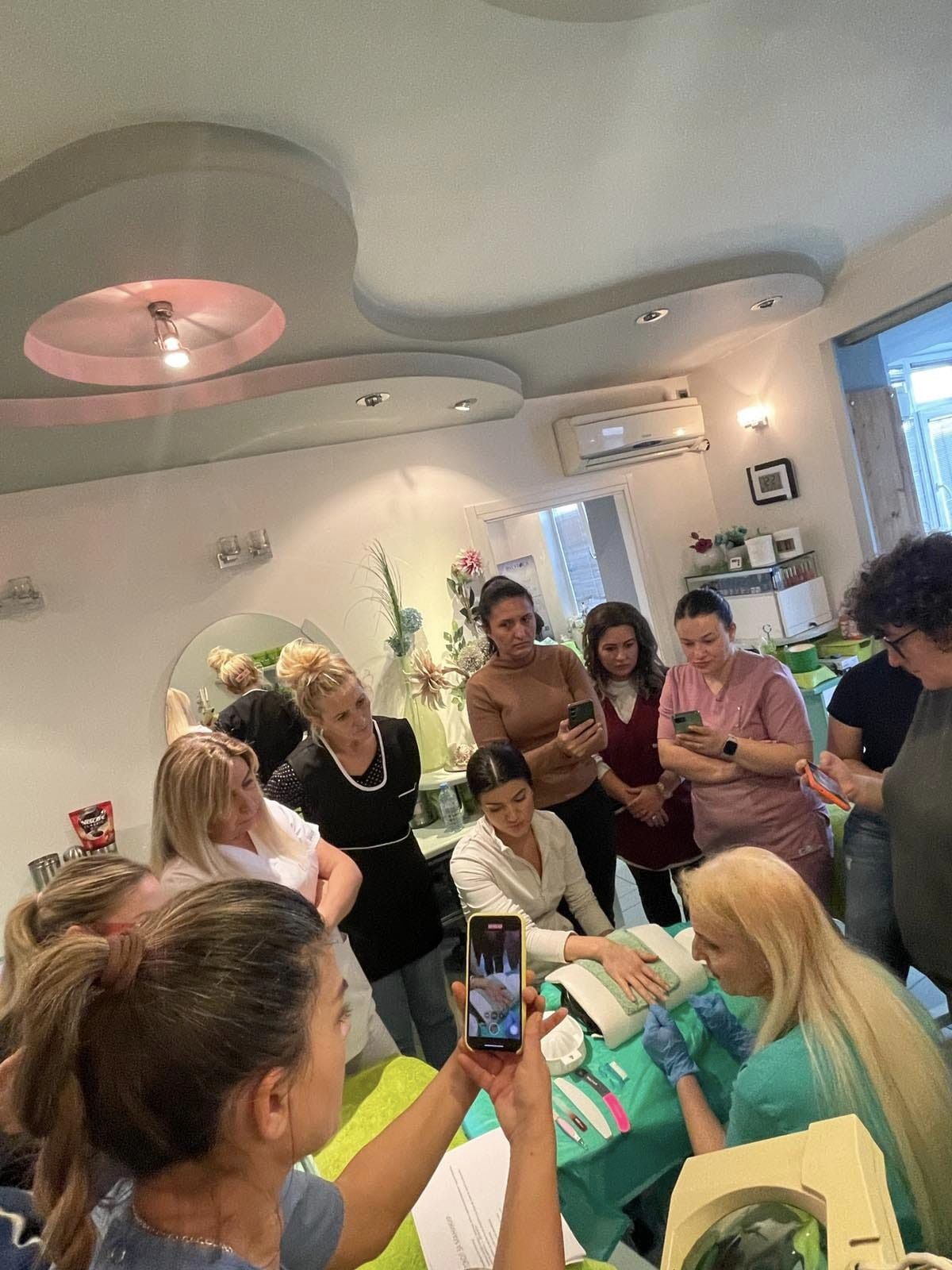
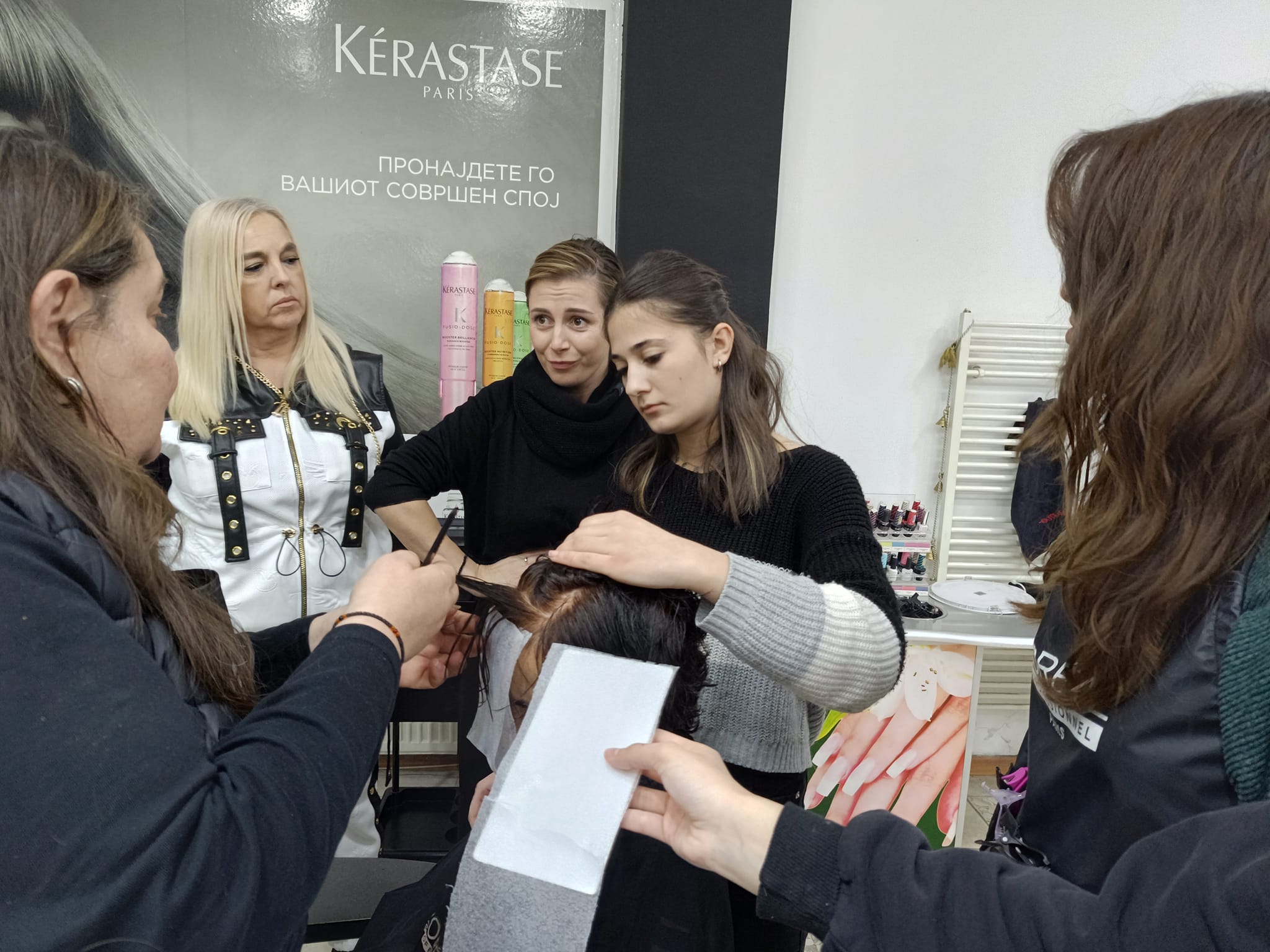
On 17 February 2015, the Chamber of Craft Skopje, as an association that brings together craftsmen and individuals performing craft activities in the territory of the City of Skopje—and which is committed to creating conditions and a framework for improving the development of craftsmanship—launched the Center for Skills and Competences. One of the Chamber’s priority tasks is to develop a skilled workforce for the craft sector and to support the creation of human resources for starting micro-businesses in the field of crafts. Crafts and the wider economy are facing a shortage of workers who possess adequate skills and competences. As a result, craftsmen are often forced to hire workers who lack the required competences and practical skills, yet must still pay their contributions and taxes while training them on the job—a process that leads to a loss of time and profit. At the same time, there is a significant number of unemployed individuals who have formal vocational education but lack the practical skills necessary to perform craft activities. The purpose of the craft training programs is to equip participants with skills and competences needed in vocational education in order to perform craft activities. The activities of the Center are directly focused on addressing the needs of craftsmen and the business community. At various events, meetings, and gatherings organized at the level of craft sections grouped by similar activities, companies regularly express their needs and challenges related to unskilled workers who are not ready to enter the work process because they lack essential skills, competences, and applicable theoretical knowledge. In this context, over the past years, based on requests from craftsmen and trends observed on the labor market, numerous research studies were conducted regarding the workforce. These studies showed that many companies lack profiles with completed vocational secondary education who can immediately join the work processes. To meet the needs of craftsmanship and the economy—and at the same time help unemployed individuals acquire the necessary skills and competences to more easily obtain employment—the Training Center was established. During the implementation of the training programs, participants acquire professional qualifications, skills, and competences for specific craft profiles, making them competitive on the labor market both in the Republic of North Macedonia and in EU member states. Considering the benefits of the training programs, the initiative emerged to formally establish the Training Center “Chamber of Craft Skopje”, founded by the Chamber of Craft Skopje. The goal of the founder is to establish a Training Center that promotes European standards for high-quality professional and vocational training, fostering democracy, inventiveness, creativity, individuality, and providing the foundation for lifelong learning. The work of the Training Center is based on the development of the individual and his/her creativity throughout the educational process, through the acquisition of new applicable knowledge and the development of professional skills and competences. This means that the trainings are individualized, as the trainer monitors each participant’s progress in mastering the required skills and competences. As part of the promotion of the Center for Skills and Competences of the Chamber of Craft Skopje, the first certificates for filigree craftsmen were awarded, based on a program accredited by the Ministry of Education and Science of the Republic of North Macedonia and the Center for Adult Education.
Adult Education Act
The Chamber of Craft Skopje has accredited verified training programs for the following occupations: Hairdresser Beautician for facial and body care Masseuse/Masseur Nail decoration technician Makeup artist Baker Filigree craftsman